Dear Respiratory Friends See you in Munich this and next week at European Respiratory Society Congress 2014!

Tuesday, September 2, 2014


Sunday, August 31, 2014
COPD: The Differences Between The Diseases We Donate To, And The Diseases That Kill Us
Julia Belluz created the infographic
below to compare how much money is donated to fight various disease and
how many people in the USA die from those same diseases. She wrote: The choices we make about where to donate money for health causes aren't
always rational. We are probably more often driven to give by a disease
that has touched a loved one than by utilitarian calculations about
which illnesses impact the most people or receive the least investment
from pharmaceutical companies.

You can see COPD discrepancy on the graphic which is pretty striking, and certainly worth thinking about!
There
are no important and less important diseases, but we can see this
simplistic approach in health care systems all over the world!
Friday, August 22, 2014
10 Reasons to attend European Respiratory Society Congress, Munich 2014
Dear friends,
as you may already know the European Respiratory
Society Annual Congress will take place in Munich, 6-10 September 2014.
You have not decided yet whether you’ll be there or
not?
So we have outlined 10 reasons why one would take
part in the event this year.
1.
Scientific and Educational Programmes
Tight schedule of programmes may attract your
attention due to a high variety of postgraduate courses on different
respiratory themes: Interventional Pulmonology, Update of phenotypes of asthma
and COPD, evidence-based approach to advanced respiratory care, Treatment of
obstructive sleep apnoea, etc. Informative and interactive lectures may be very
useful for your research, while participating in workshops would allow you to
follow the discussion and share your opinion, which is not the least important
argument. „Meet the Professor” seminars are elaborated for those interested in
the exchange of ideas with leading experts in the respiratory field.

2.
Personal Presentation
That would be too simple to attend the Congress and
not to express yourself. That is why the next reason is sharing your work, be
it a poster, or e-presentation. Probably not everyday we have an opportunity to
show the results of our work and to get a feedback at the international Congress
of the same level.

3. Healthy Lungs
for Life
Healthy Lungs for Life is one of the largest ever lung
health campaigns, raising awareness of the importance of healthy lungs to
healthcare professionals, scientists, primary care, patients, policy makers and
the public through a full range of events, projects and promotional activities.
In 2014, the theme is "Breathe clean air".

4.
Meet colleagues and friends
Being a part of community united for several days
by a common aim – speak about respiratory diseases is also a great chance to
meet colleagues and friends. Every year thousands of people attend the
congress, and for sure one can get acquainted with interesting people or merely
see old friends.

5.
Press conferences

6.
HERMES examination
You can take HERMES examination in adult or
paediatric respiratory medicine which was created for trainees and specialists
interested in knowledge assessment according to European standards. Successful
completion of the examination leads to European Diploma in Respiratory Medicine
and permits be part of the HERMES Diplomates Club.

7. Respiratory Championship session
Come and join our 4 teams representing Germany, Greece, Malta and Poland who are competing to be the Champions of Respiratory Medicine.
Sunday, 7 September 13:15 - 14:15 (Room 4 - ICM)
The quiz master will present illustrated cases
(including x-rays, lung function and laboratory results, pathological slides,
etc.) that focus on various fields of respiratory medicine.
The session provides a state of the art review and
updates on recent advances in major areas of respiratory medicine – an ideal
preparation for those preparing the HERMES examination, or for anyone
interested in challenging their knowledge and expertise.

8. Exhibition
There is an activity one would like to accomplish
between attending the courses and presenting the posters. Namely visiting the
exhibition of world-known pharmaceutical and engineering companies, medical
bookshops and technological corporations that generously offer information,
materials, equipment and create a special atmosphere of international
collaboration.

9. Patient Forum ELF/ERS session:'Improving CPAP and NIV - a user perspective'
The session will explore how professionals can improve their practice and healthcare outcomes by listening to the patients’ experience. Too frequently, professional prescribing CPAP and NIV are unaware of the realities of using CPAP and practical issues experienced by patients. Many of these difficulties can be addressed through open professional-patient dialogue, and adjustments to the apparatus.
10.
Munich
And finally who would stay at ERS Congress round
the clock? Certainly you would like to see the Munich in all its’ autumn
beauty. Therefore there would defenitely be time for city tours, excursions through
historic centre with all its sights.

by Mila Corlateanu
Sunday, August 17, 2014
Healthy Lungs for Life 2014 campaign VIDEO
Respiratory Decade is an active supporter of Healthy Lungs for Life 2014!! Today we are presenting Healthy Lungs for Life 2014: preview video!
Healthy Lungs for Life is one of the largest ever lung
health campaigns, raising awareness of the importance of healthy lungs to
healthcare professionals, scientists, primary care, patients, policy makers and
the public through a full range of events, projects and promotional activities.
In 2014, the theme is "Breathe clean
air".
Sunday, August 10, 2014
Healthy Lungs for Life 2014 campaign in the best traditions of the Year of the Lung 2010
Respiratory Decade joins Healthy Lungs for Life
campaign and will support it actively via our Respiratory blog and our
Respiratory facebook groups and pages!
In 2010 was started very ambitious initiative YEAR OF
THE LUNG. YEAR OF THE LUNG was the most important and the most successful
Respiratory campaign which emphasized the importance of public awareness about
respiratory diseases. Speaking at the European Launch, Professor Nikos Siafakas,
European Respiratory Society President 2010, said that the most respiratory
diseases are both preventable and treatable, treatment however is very costly,
and effective prevention policies in the EU and worldwide are severely
lacking”.
Healthy Lungs for Life is one of the largest ever lung
health campaigns, raising awareness of the importance of healthy lungs to
healthcare professionals, scientists, primary care, patients, policy makers and
the public through a full range of events, projects and promotional activities.
In 2014, the theme is "Breathe clean
air".

In 2014, Healthy Lungs for Life aims to:
- Increase knowledge of the impact of poor air quality on lung health
- Raise awareness of the actions that everyone can take to protect their own lungs from indoor and outdoor air pollution.
Organizers said: We are inviting respiratory professionals and the public from
across the globe to join us in this campaign and we can help you by
providing resources and materials to host your own events. We are also
holding a number of events to coincide with the European Respiratory
Society International Congress 2014 across Munich and at the Congress
centre itself. The more people supporting and taking part in events, the
more powerful the messages will be.

Tuesday, August 5, 2014
NEW Clinical Practice Guideline From the American College of Physicians: Diagnosis of Obstructive Sleep Apnea in Adults 2014
Dear friends today was published A Clinical Practice Guideline From the American College of Physicians: Diagnosis of Obstructive Sleep Apnea in Adults 2014!!!
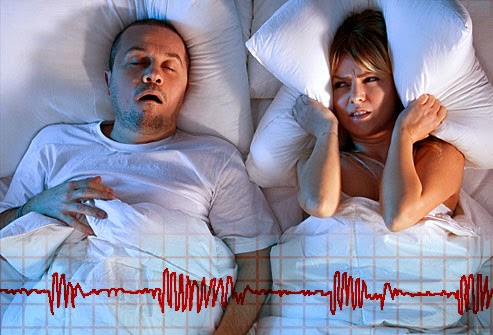
Description: The
American College of Physicians (ACP) developed this guideline to
present the evidence and provide clinical recommendations on the
diagnosis of obstructive sleep apnea in adults.
Methods: This guideline is based on published literature on this topic that was identified by using MEDLINE (1966 through May 2013), the Cochrane Central Register of Controlled Trials, and the Cochrane Database of Systematic Reviews. Searches were limited to English-language publications. The clinical outcomes evaluated for this guideline included all-cause mortality, cardiovascular mortality, nonfatal cardiovascular disease, stroke, hypertension, type 2 diabetes, postsurgical outcomes, and quality of life. Sensitivities, specificities, and likelihood ratios were also assessed as outcomes of diagnostic tests. This guideline grades the evidence and recommendations by using ACP's clinical practice guidelines grading system.
Recommendation 1: ACP recommends a sleep study for patients with unexplained daytime sleepiness. (Grade: weak recommendation, low-quality evidence)
Recommendation 2: ACP recommends polysomnography for diagnostic testing in patients suspected of obstructive sleep apnea. ACP recommends portable sleep monitors in patients without serious comorbidities as an alternative to polysomnography when polysomnography is not available for diagnostic testing. (Grade: weak recommendation, moderate-quality evidence).
Qaseem A, Dallas P, Owens DK, Starkey M, Holty JC, Shekelle P, et al. Diagnosis of Obstructive Sleep Apnea in Adults: A Clinical Practice Guideline From the American College of Physicians. Ann Intern Med. 2014;161:210-220. doi:10.7326/M12-3187
http://annals.org/article.aspx?articleid=1892620#.U-DiykrFNOg.hootsuite
Methods: This guideline is based on published literature on this topic that was identified by using MEDLINE (1966 through May 2013), the Cochrane Central Register of Controlled Trials, and the Cochrane Database of Systematic Reviews. Searches were limited to English-language publications. The clinical outcomes evaluated for this guideline included all-cause mortality, cardiovascular mortality, nonfatal cardiovascular disease, stroke, hypertension, type 2 diabetes, postsurgical outcomes, and quality of life. Sensitivities, specificities, and likelihood ratios were also assessed as outcomes of diagnostic tests. This guideline grades the evidence and recommendations by using ACP's clinical practice guidelines grading system.
Recommendation 1: ACP recommends a sleep study for patients with unexplained daytime sleepiness. (Grade: weak recommendation, low-quality evidence)
Recommendation 2: ACP recommends polysomnography for diagnostic testing in patients suspected of obstructive sleep apnea. ACP recommends portable sleep monitors in patients without serious comorbidities as an alternative to polysomnography when polysomnography is not available for diagnostic testing. (Grade: weak recommendation, moderate-quality evidence).
Qaseem A, Dallas P, Owens DK, Starkey M, Holty JC, Shekelle P, et al. Diagnosis of Obstructive Sleep Apnea in Adults: A Clinical Practice Guideline From the American College of Physicians. Ann Intern Med. 2014;161:210-220. doi:10.7326/M12-3187
http://annals.org/article.aspx?articleid=1892620#.U-DiykrFNOg.hootsuite
Sunday, August 3, 2014
AIRWAYS-ICPs - Integrated care pathways for airway diseases: new perspective
Dear Respiratory friends please read about new perspectives with AIRWAYS-ICPs project!
Chronic respiratory diseases are major non-communicable diseases.
Asthma and allergic diseases occur throughout the life
cycle and can begin during pregnancy and
childhood. In Europe, they affect 30 million children and adults under
45 years of
age. Chronic obstructive pulmonary disease
(COPD) has an estimated annual death rate of over 4 million people
globally. Among
the European Union (EU) member states, asthma
accounted for an average of 53 hospital admissions per 100 000
population in
2009, and the average COPD-related admission
rate was 184. The annual direct and indirect costs in the 28 EU countries due to COPD or asthma are estimated at €48 billion and €34
billion, respectively. Chronic respiratory diseases affect active and healthy ageing. Asthma in children or adults is a common risk factor for
COPD in adults.

The aim of AIRWAYS-ICPs is to improve healthy life years
and to reduce burden (emergency visits, avoidable hospitalisations,
disability and costs) while improving quality of
life worldwide, and, in the longer term, to reduce disease incidence by
new
and innovative prevention strategies.
AIRWAYS-ICPs has a clear strategic relevance with regard to the EU Health Strategy as it will bring added value to the existing
public health knowledge:
-
To propose a common framework for chronic respiratory disease (and for comorbidities) ICPs for the entire EU which can then be expanded to other regions (e.g. the Commonwealth of Independent States) and which will allow comparability and trans-national initiatives.
-
To help risk stratification in chronic respiratory disease patients, using a common strategy.
-
To develop cost-effective policies, in particular strengthening those on smoking and environment exposure.
-
To have a significant implication on the health of citizens in the short term (reduction of morbidity, improvement of education in children and of work in adults) and in the long term (healthy ageing).
-
To propose a common simulation tool for the entire EU in order to assist physicians in the segmentation of patients and in the choice of pathways.
 More information was published last week in European Respiratory Journal:et al.Integrated care pathways for airway diseases (AIRWAYS-ICPs) Eur Respir J 2014 44:304-323; published ahead of print 2014, doi:10.1183/09031936.00014614http://erj.ersjournals.com/content/44/2/304.extract?etoc
Subscribe to:
Posts (Atom)