Showing posts with label Smoking cessation. Show all posts

Sunday, October 23, 2016

The Health Effects of Electronic Cigarettes (2016 free full text article from NEJM)

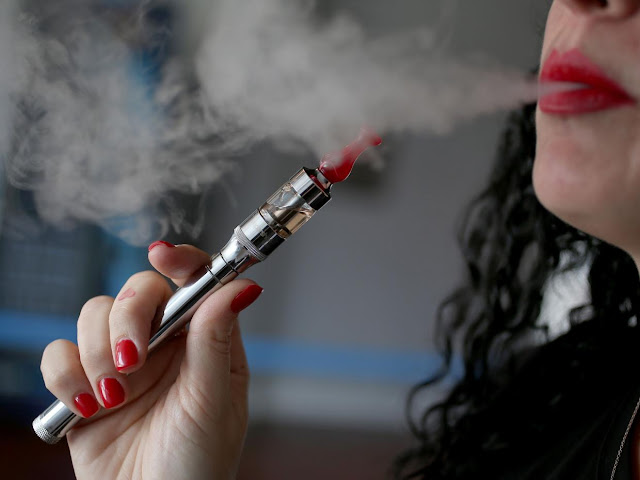
Electronic cigarettes (e-cigarettes), also known as electronic nicotine-delivery systems, are devices that produce an aerosol by heating a liquid that contains a solvent (vegetable glycerin, propylene glycol, or a mixture of these), one or more flavorings, and nicotine, although the nicotine may be omitted. The evaporation of the liquid at the heating element is followed by rapid cooling to form an aerosol. This process is fundamentally different from the combustion of tobacco, and consequently the composition of the aerosol from e-cigarettes and the smoke from tobacco is quite different. E-cigarette aerosol is directly inhaled (or “vaped”) by the user through a mouthpiece. Each device includes a battery, a reservoir that contains the liquid, and a vaporization chamber with heating element . The design of the e-cigarette was originally based on the design of conventional cigarettes but has since evolved, with later-generation devices permitting users to refill a single device with different liquids and to customize the heating element.
http://www.nejm.org/doi/full/10.1056/NEJMra1502466
It is clear that the use of e-cigarettes has biologic effects and possibly health-related effects on persons who do not smoke conventional tobacco products. Although some studies suggest that smoking e-cigarettes may be less dangerous than smoking conventional cigarettes, more needs to be learned. A particular challenge in this regard is the striking diversity of the flavorings in e-cigarette liquids, since the effects on health of the aerosol constituents produced by these flavorings are unknown. At present, it is impossible to reach a consensus on the safety of e-cigarettes except perhaps to say that they may be safer than conventional cigarettes but are also likely to pose risks to health that are not present when neither product is used. Epidemiologic data indicate that e-cigarette use is growing among minors and young adults and may promote nicotine addiction in these age groups among those who would otherwise have been nonsmokers. More research is needed to understand the effectiveness of e-cigarettes as a smoking-cessation tool, to identify the health risks of e-cigarette use, and to make these products as safe as possible. Even as this research is under way, regulations that make e-cigarettes unavailable to children is warranted, as are public health initiatives that discourage nonsmokers from smoking conventional cigarettes or using e-cigarettes.
Read more:

Tuesday, May 31, 2016

World No Tobacco Day 2016: Plain-packaging to protect our youth: “Progress made, challenges ahead”

The European Respiratory Society hosted a World No Tobacco Day event Plain-packaging to protect our youth: “Progress made, challenges ahead” in collaboration with the European Network for Smoking Prevention (ENSP) to highlight the research-backed benefits of plain packaging on tobacco products and to celebrate the countries who have led the way – hoping to encourage remaining countries to follow their lead.
The event took place at the European Parliament in Brussels on 31 May, 2016 and supports the theme announced by the World Health Organisation (WHO) for this year’s World No Tobacco Day campaign, which is: “Get ready for plain-packaging”. It is also timely alongside the introduction of plain packaging on tobacco products in the U.K, Ireland and France.

Sunday, May 29, 2016

World No Tobacco Day 31 May 2016: Get ready for plain packaging

Tobacco packaging is a mobile billboard promoting consumption of tobacco products. If you strip back the decoration, gloss and misleading elements of tobacco packaging, you are left with little more than a box of deadly, addictive products that kill approximately 6 million people a year and harm the health of many more. Plain packaging helps reveal the grim reality of tobacco products.
For World No Tobacco Day on 31 May 2016, WHO and the Secretariat of the WHO Framework Convention on Tobacco Control are calling on countries to get ready for plain (also called standardized) packaging of tobacco products. 

The aims of plain packaging are to:
  • reduce the attractiveness of tobacco products;
  • eliminate the effect of tobacco packaging as a form of advertising and promotion;
  • eliminate package design techniques that may suggest that some products are less harmful than others; and
  • increase the noticeability and effectiveness of health warnings.
The results of experimental studies, surveys and focus-group studies show that plain packaging achieves its objectives. WHO recommends that plain packaging be used as part of a comprehensive approach to tobacco control, which also includes comprehensive bans on tobacco advertising, promotion and sponsorship and other tobacco packaging and labelling measures, such as health warnings.

Saturday, May 28, 2016

World No Tobacco Day 2016: WHO study Group on tobacco Product regulation (tobreg): banning menthol in tobacco products

Menthol is a flavouring agent commonly used in cigarettes and other tobacco products. Menthol cigarettes are used more frequently by younger smokers, women and ethnic minorities, and their use facilitates both initiation and continued smoking, leading to addiction. These issues have raised global concern. 

http://apps.who.int/iris/bitstream/10665/205928/1/9789241510332_eng.pdf?ua=1

To address this public health issue, the WHO Study Group on Tobacco Product Regulation (TobReg) has prepared this advisory note on menthol, which synthesizes recent studies on the prevalence and health effects of menthol in tobacco products. It provides evidence-based conclusions and recommendations for policy-makers and regulators, including a ban on menthol (and its analogues, derivatives and precursors) in cigarettes.

Full text:

Saturday, April 23, 2016

Link between cigarette smoking and COPD: whats new in 2016

Our new article was published in ‪#‎Pneumologia‬: from ‪#‎smoking‬ to ‪#‎COPD‬: current approaches
Chronic obstructive pulmonary disease (COPD) remains a leading cause of death all over the world. Even though it is the most intensely studied disease induced by cigarette smoking there are still incomplete researches concerning its pathophysiology and treatment. So far it has been determined the deleterious effects of the secreted molecules diversity and some feasible therapies for their diminution. 
https://www.researchgate.net/publication/299775809_From_smoking_to_COPD_-_current_approaches
Discouraged by the fact that autoimmunity represents a black box full of surprises, identifying an autoimmune origin in COPD induced by smoking might serve not only as a starting point for new research but also strengthens the relevance of smoking cessation in such patients. By establishing tighter connections among smoking and the autoimmune origin of COPD similar to well defined autoimmune diseases there will be achievable to direct COPD’s therapy toward different classes of medicine.
In what concerns the available approaches toward smokers with COPD, the vital step in defeating the disease and preventing other noxious effects of cigarette smoking, remains smoking cessation.
Full text:

Friday, April 8, 2016

From smoking to COPD – current approaches in 2016 (full text from Pneumologia)

Our new article was published in ‪#‎Pneumologia‬: from ‪#‎smoking‬ to ‪#‎COPD‬: current approaches
Chronic obstructive pulmonary disease (COPD) remains a leading cause of death all over the world. Even though it is the most intensely studied disease induced by cigarette smoking there are still incomplete researches concerning its pathophysiology and treatment. So far it has been determined the deleterious effects of the secreted molecules diversity and some feasible therapies for their diminution. 
https://www.researchgate.net/publication/299775809_From_smoking_to_COPD_-_current_approaches?ev=prf_pub
According to current studies more relevance gains the possible autoimmune origin of COPD and the epigenetic modifications. The idea of autoimmunity in smoking induced COPD began to be speculated with the discovery of autoantibodies in patient's serum, but there are some studies who consider antibody complexes that reside in the lung tissue as more relevant for future research. By developing the autoimmune aspect of COPD it will become possible to select more precise treatment strategies. The importance of epigenetic changes in this field might be appreciated starting with the fact of an existing connection between epigenetic modifications induced by maternal smoking and latter COPD development. This explains the tendency toward different drugs capable of restoring these transformations such as deacetylation agents expected also to prevent steroid resistance. Nevertheless smoking cessation remains as the indispensable approach for COPD treatment and prevention.
Keywords: COPD, smoking, epigenetic changes 
Full text:

Friday, January 15, 2016

Meeting with journalists: "About smoking: from theory to the public" By Professor Florin Mihălțan, chairman of the Romanian Society of Pulmonology


Smoke-free law enforcement is one of the major priorities on the Romanian Society of Pulmonology agenda.
Our mission is to have a comprehensive smoke-free law, which can not only be accepted but also be applied and monitored. Furthermore, we need educational packages, higher taxes on tobacco and high-impact pictograms, in order to drastically reduce tobacco consumption among Romanians.
The Romanian Society of Pulmonology, an organisation that has been involved for several years in the implementation of a smoke-free law, brought together important opinion leaders in the field of pulmonology and cardiology, public health professionals, authorities, social life representatives and journalists, in order to introduce a mutual goal: an accurate and more effective communication of topics regarding smoking in Romania.
The Romanian Society of Pulmonology’s steps for implementing legislation that prohibits smoking in public places, as well as for reducing the number of smokers, represent actions intended to align Romania to global health policy. Since last year, the action plan was founded on a solid partnership between the Romanian Society of Pulmonology and the Romanian Society of Cardiology.
The implementation of smoke-free law and the attempt to change social behaviour are slow and difficult, therefore the initiative requires partnerships. The cardiologists who attended the meeting highlighted the importance of partnerships between medical societies involved in combating smoking, in order to have a deeper impact at the social level.
These actions are all the more pressing since the risk of myocardial infarction in young smokers is high in Romania. Another important topic the experts approached was education as an important element in terms of raising awareness regarding the risks of smoking.
The representatives of the authorities admitted that, unfortunately, Romania is the only country in the European Union which has not adopted legislation to ban smoking in enclosed public places, emphasising that Romania should reach the European standards. However, there is an optimistic attitude regarding the adoption of smoke-free law and the hope that the lawmakers will reach a consensus in applying the law, which will also bring a beneficial change at the community level.
The civil society representatives argued that the implementation of the smoke-free law protects the rights of non-smokers and helps them to enjoy the fresh air in public spaces. They also pointed out the long term repercussions that tobacco consumption has on the economy. If we do a cost-benefit analysis, it would show that, if there is not a responsible intervention the costs associated with hospitalisation, workplace absenteeism, loss of productivity etc., will grow.
In terms of trying to change the behaviour of smokers, specialists rely heavily on reverse psychology, communication more about the positive effects of quitting smoking and less on the negative effects of nicotine addiction. The impact of the meeting was positive in terms of media representation. The event had a good coverage on Romanian TV channels, radio and online media.

Friday, August 28, 2015

Do you agree that E-cigarettes are 95% less harmful to health than normal cigarettes???

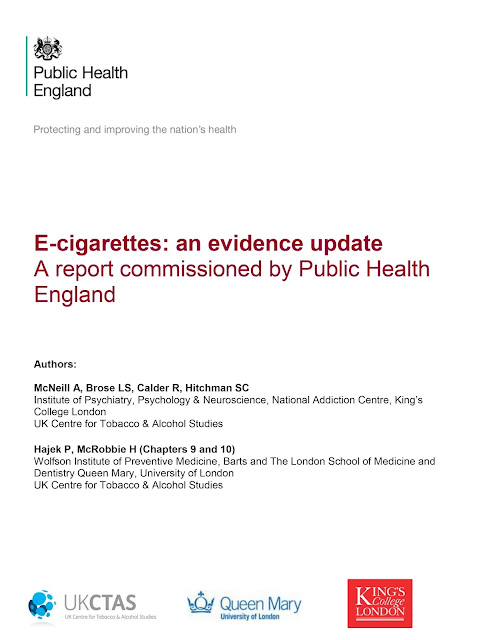
Last week, Public Health England (PHE) published landmark review of evidence about e-cigarettes. The headline in their press release quoted their top-line finding—“E-cigarettes around 95% less harmful than tobacco”. Kevin Fenton, Director of Health and Wellbeing at PHE, commented that, “E-cigarettes are not completely risk free but when compared to smoking, evidence shows they carry just a fraction of the harm”. Indeed, the 95% figure was widely picked up in news media.
https://www.gov.uk/government/uploads/system/uploads/attachment_data/file/457102/Ecigarettes_an_evidence_update_A_report_commissioned_by_Public_Health_England_FINAL.pdf

There are more questions than answers after reading of this review!  In Lancet editorial this work  was  declared methodologically weak and controversial caused by the declared conflicts of interest surrounding its funding, raising serious questions not only about the conclusions of the this report, but also about the quality of the agency's peer review process.

Friday, August 14, 2015

2015 Current Understanding and Future Research Needs in Tobacco Control and Treatment by American Thoracic Society

Yesterday in Am J Respir Crit Care Med was published An Official American Thoracic Society Research Statement: Current Understanding and Future Research Needs in Tobacco Control and Treatment.
Introduction: Since the mid-20th century, the scientific community has substantially improved its understanding of the worldwide tobacco epidemic. Although significant progress has been made, the sheer enormity and scope of the global problem put it on track to take a billion lives this century. Curbing the epidemic will require maximizing the impact of proven tools as well as the development of new, breakthrough methods to help interrupt the spread of nicotine addiction and reduce the downstream morbidity.
Methods: Members of the Tobacco Action Committee of the American Thoracic Society queried bibliographic databases, including Medline, Embase, and the Cochrane Collaborative, to identify primary sources and reviews relevant to the epidemic. Exploded search terms were used to identify evidence, including tobacco, addiction, smoking, cigarettes, nicotine, and smoking cessation. Evidence was consolidated into three thematic areas: (1) determinants of risk, (2) maternal-fetal exposure, and (3) current tobacco users. Expert panel consensus regarding current gaps in understanding and recommendations for future research priorities was generated through iterative discussion.
http://www.atsjournals.org/doi/abs/10.1164/rccm.201506-1081ST#.Vc68j5cXyUk

Results: Although much has been accomplished, significant gaps in understanding remain. Implementation often lags well behind insight. This report identifies a number of investigative opportunities for significantly reducing the toll of tobacco use, including: (1) the need for novel, nonlinear models of population-based disease control; (2) refinement of “real-world” models of clinical intervention in trial design; and (3) understanding of mechanisms by which intrauterine smoke exposure may lead to persistent, tobacco-related chronic disease.
Discussion: In the coming era of tobacco research, pooled talent from multiple disciplines will be required to further illuminate the complex social, environmental and biological codeterminants of tobacco dependence.
Read More:  

Wednesday, July 8, 2015

WHO Report on the global tobacco epidemic 2015

Too few governments levy appropriate levels of tax on cigarettes and other tobacco products. They therefore miss out on a proven, low-cost measure to curb demand for tobacco, save lives and generate funds for stronger health services, according to the "WHO Report on the global tobacco epidemic 2015".
http://www.who.int/tobacco/global_report/2015/report/en/
 
The report focuses on raising taxes on tobacco. Although 33 countries impose taxes that represent more than 75% of the retail price of a packet of cigarettes, many countries have extremely low tax rates. Some have no special tax on tobacco products at all.
“Raising taxes on tobacco products is one of the most effective – and cost-effective – ways to reduce consumption of products that kill, while also generating substantial revenue,” says Dr Margaret Chan, WHO Director-General. “I encourage all governments to look at the evidence, not the industry’s arguments, and adopt one of the best win-win policy options available for health.”
Strategies to support the implementation of demand reduction measures contained within the WHO Framework Convention on Tobacco Control (WHO FCTC), such as the “MPOWER” package, have helped save millions of lives in the past decade. MPOWER was established in 2008 to promote government action on 6 tobacco control strategies – 1 for each letter of the MPOWER acronym – to stamp out the tobacco epidemic, namely to:
  • Monitor tobacco use and prevention policies;
  • Protect people from tobacco smoke;
  • Offer help to quit tobacco use;
  • Warn people about the dangers of tobacco;
  • Enforce bans on tobacco advertising, promotion and sponsorship; and
  • Raise taxes on tobacco.
The main findings of the report, funded by Bloomberg Philanthropies, include the fact that raising taxes is the least implemented MPOWER measure in terms of population coverage, and the one that has seen the least improvement in terms of government action since 2008. However, by 2014, 11 countries had raised taxes so that they represent more than 75% of the retail price of a packet of cigarettes, joining the 22 countries that had similarly high taxes in place in 2008.
Dr Douglas Bettcher, Director of WHO’s Department for the Prevention of Noncommunicable Diseases (NCDs), says higher tobacco taxes and prices are proven methods to reduce consumption and promote quitting the use of tobacco products.
“Evidence from countries such as China and France shows that higher tobacco product prices linked to increased taxes lead to declines in smoking prevalence and tobacco-related harm, such as lung cancer deaths,” says Dr Bettcher.
Dr Vera da Costa e Silva, Head of the WHO FCTC Secretariat, notes that the Convention offers governments policies to curb illicit trade in tobacco products to reduce demand and boost tax revenues from tobacco sales. “Countries should consider implementing the provisions of the Protocol to Eliminate Illicit Trade in Tobacco Products to confront the illegal market,” she adds.
Tobacco taxation could also be a key source of funding for implementing the post-2015 Sustainable Development Goals.
Tobacco-related illness is one of the biggest public health threats the world has ever faced. Approximately 1 person dies from a tobacco-related disease every 6 seconds, equivalent to around 6 million people a year. That is forecast to rise to more than 8 million people a year by 2030, unless strong measures are taken to control the epidemic.
Tobacco use is also one of the 4 main risk factors behind the global epidemic of noncommunicable diseases, primarily cancers, cardiovascular and lung diseases, and diabetes. In 2012, these diseases killed 16 million people prematurely (before the age of 70 years), with more than 80% occurring in low- and middle-income countries.

Saturday, April 18, 2015

E-Cigs Have 10 times More Cancerogens Than Regular Cigarettes

A recent report from The Guardian reveals some extremely important news for people who are looking to quit smoking. Japanese scientists have recently announced that e-cigarettes contain 10 times the level of cancer-causing carcinogens than its counterpart in the tobacco world. At one time, e-cigarettes were touted as the answer to smoking without the complication of so many dangers.
The electronic nicotine products have increased in popularity with many believing that they are receiving a hit of nicotine without the health damage of a normal cigarette that is laden with chemicals.
However, the research commissioned by the Japanese Ministry of Health found formaldehyde and acetaldehyde carcinogens in the liquid produced by a number of e-cigarette products, a health ministry official stated.

The group also learned that e-cigarettes can fuel potentially life-threatening drug-resistant pathogens. This is based on lab study where they tested e-cigs vapor on live methicillin-resistant Staphylococcus aureus (MRSA) and human cells.
The formaldehyde carcinogen was found to be much more present in the e-cigarette liquids than in the chemicals used in regular cigarettes, according to the official.

Saturday, March 21, 2015

E-Cigarettes: Good or Bad??? New evidences from experts

Are E-Cigarettes a useful tool for smoking cessation or a gateway to further health risks? We heard from some of the experts at World Conference on Tobacco or HealthUnited Arab Emirates, Abu Dhabi, 17 - 21 March 2015!

Saturday, May 31, 2014

Tobacco-quitting cigarettes on World No Tobacco Day 2014

Taiwanese designer Tseng Yi Wen has conceived a series of 4 tobacco-quitting cigarettes aimed to break smoking habits. the concept behind each would make tobacco consumption significantly less, while still allowing for an occasional smoke.

Tobacco-day’ prints the date on every cigarette, reminding the smoker of how many they have consumed, and to limit the allowed number of smokes per month. 
‘could you give me a cigarette?’ is a common question often asked by smokers. yi wen has conceived a single cigarette that is sharable, to be broken into two parts. by dividing the tobacco, you help reduce the other person’s smoking amount, and your own.
 

Thursday, May 29, 2014

World No Tobacco Day 2014 is 31 May 2014

For a long time, the tobacco industry has fiercely opposed levies on tobacco products and launched intense campaigns against efforts to raise tobacco taxes, making the fight to curb tobacco use challenging. The reality is that raising taxes on tobacco products is the most effective way to reduce tobacco use, generate revenue for health programs and most importantly, save lives. That’s why the World Health Organization (WHO) is putting tobacco taxes back on the agenda for World No Tobacco Day 2014.
https://www.facebook.com/events/706491222730461/

According to WHO estimates, if all countries increased tobacco excise taxes by 50% per pack this would result in 49 million fewer smokers and 11 million lives saved. Plus, governments around the world would earn an extra $101 billion that they could put towards health and social programs.
Raising taxes on tobacco and making tobacco products more expensive is particularly effective in reducing tobacco use in developing countries, where people often do not get adequate treatment if they fall sick from illnesses associated with tobacco use like cancer.
WHO collects and analyzes data of tax prices around the world and tracks best practices. It advises governments on how best to strengthen their tax systems and raise tax rates. We know that some countries are already benefitting from increased tobacco taxes.  Turkey, for example, has steadily increased excise taxes since 2008. Within the following four years, tobacco sales had fallen by 12%. In 2008, 22 countries had tax rates sufficiently high enough to impact consumption. In 2012, that had increased to 32 countries.

Friday, May 9, 2014

World No Tobacco Day - 31 May 2014

Raise taxes on tobacco

The global tobacco epidemic kills nearly 6 million people each year, of which more than 600 000 are non-smokers dying from breathing second-hand smoke. Unless we act, the epidemic will kill more than 8 million people every year by 2030. More than 80% of these preventable deaths will be among people living in low-and middle-income countries.
For World No Tobacco Day 2014, WHO and partners call on countries to raise taxes on tobacco.
https://www.facebook.com/events/706491222730461/?context=create&source=49#
 
Reduce tobacco consumption, save lives
 
Under the WHO Framework Convention on Tobacco Control (WHO FCTC), countries should implement tax and price policies on tobacco products as a way to reduce tobacco consumption. Research shows that higher taxes are especially effective in reducing tobacco use among lower-income groups and in preventing young people from starting to smoke. A tax increase that increases tobacco prices by 10% decreases tobacco consumption by about 4% in high-income countries and by up to 8% in most low- and middle-income countries.
Furthermore, increasing excise taxes on tobacco is considered to be the most cost-effective tobacco control measure. The World Health Report 2010 indicated that a 50% increase in tobacco excise taxes would generate a little more than US$ 1.4 billion in additional funds in 22 low-income countries. If allocated to health, government health spending in these countries could increase by up to 50%.

Goals

The ultimate goal of World No Tobacco Day is to contribute to protecting present and future generations not only from the devastating health consequences due to tobacco, but also from the social, environmental and economic scourges of tobacco use and exposure to tobacco smoke.
Specific goals of the 2014 campaign are that:
  • governments increase taxes on tobacco to levels that reduce tobacco consumption;
  • individuals and civil society organizations encourage their governments to increase taxes on tobacco to levels that reduce consumption.

Friday, January 3, 2014

Stop any type of smoking

Earlier we had very good news from USA about ban of e-cigarettes in New York. It is paradox, but bad news about smoking are also from USA: Colorado kicks off legal sales of recreational marijuana Wednesday, 1 January 2014 at state-licensed stores. 

Thursday, December 5, 2013

What Happens When A Smoker Quits

Dear Respiratory friends we are happy to present info graphic: What Happens When A Smoker Quits!


Tuesday, November 5, 2013

TWINS WHO SMOKE LOOK OLDER

Dear Respiratory friends we are presenting new evidence about effect of smoking!!!
Twins who smoke show more premature facial aging, compared to their non-smoking identical twins, reports a study in the November issue of Plastic and Reconstructive Surgery®, the official medical journal of the American Society of Plastic Surgeons (ASPS).
It is well-known that smoking is bad for you, but do you know how it affects the way you look?
Smoking causes dry skin and increases the chances of facial wrinkling. It depletes the skin of oxygen and essential nutrients.
Take a look at the pictures of these different pairs of twins and try and guess who is the smoker without looking at the captions!

The study finds significant differences in facial aging between twins with as little as five years' difference in smoking history, says a new report by ASPS Member Surgeon Dr. Bahman Guyuron, Professor and Chairman, Department of Plastic Surgery, University Hospital Case Medical and Case School of Medicine, Cleveland. The results also suggest that the effects of smoking on facial aging are most apparent in the lower two-thirds of the face.

Wednesday, October 30, 2013

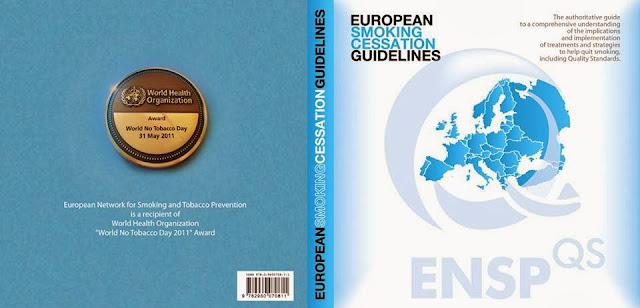
European Smoking Cessation Guidelines 2013

Dear Respiratory friends we are happy to present new Smoking Cessation Guidelines!

The European Smoking Cessation Guidelines and Quality Standards are the main output of a project undertaken by ENSP to create a coherent and reliable set of guidelines for healthcare professionals working in the field of smoking cessation. The Guidelines form a complete range of tools to support smoking cessation strategies. The work was undertaken by the Editorial Board comprising seven eminent professors and the Board of Revisers from across the entire European continent and is the first of its kind. These guidelines are in accordance with Article 14 of the Framework Convention on Tobacco Control (FCTC), which states that:
Parties should develop and disseminate comprehensive tobacco dependence treatment guidelines based on the best available scientific evidence and best practices, taking into account national circumstances and priorities. These guidelines should include two major components: (1) a national cessation strategy, to promote tobacco cessation and provide tobacco dependence treatment, aimed principally at those responsible for funding and implementing policies and programs; and (2) national treatment guidelines aimed principally at those who will develop, manage and provide cessation support to tobacco users.
http://www.ensp.org/sites/default/files/ENSP-ESCG_FINAL.pdf
This project aims to support smoking cessation activities and strengthen their impact by:
  • providing health professionals with a European template of smoking cessation guidelines and best practice;
  • providing the tobacco control community with tools for monitoring and accreditation.

Sunday, October 27, 2013

Waterpipe tobacco smoking: it is so dangerous as smoking or no?

Many medical students and young people are asking me about effects of waterpipe tobacco smoking or narghila. it is so dangerous as smoking or no?
Waterpipe tobacco smoking is a centuries-old tobacco use method with an ambiguous origin and links to the countries of southwest Asia and north Africa. Although known by many different names (eg, hookah, narghile, shisha), the term waterpipe has been used for the last 2 decades in the English language scientific literature to refer to any of a variety of instruments that involve passing tobacco smoke through water before inhalation. Contrary to popular belief that waterpipe tobacco smoking is less lethal than cigarette smoking, emerging research indicates that both involve comparable health risks including nicotine/tobacco dependence.
One more argument was published last days in Chest journal: Laboratory and Clinical Acute Effects of Active and Passive Indoor group Water-Pipe (Narghile) Smoking.
One session of indoor group active waterpipe smoking resulted in significant increases in COHb and serum nicotine levels (8- and 18-fold, respectively), and was associated with adverse cardio-respiratory health effects. The minor effects found in passive smokers suggest that they too may be affected adversely by exposure to waterpipe smoking.
We are for Global ban of Waterpipe tobacco smoking!!!