Showing posts with label lung cancer. Show all posts

Saturday, May 20, 2017

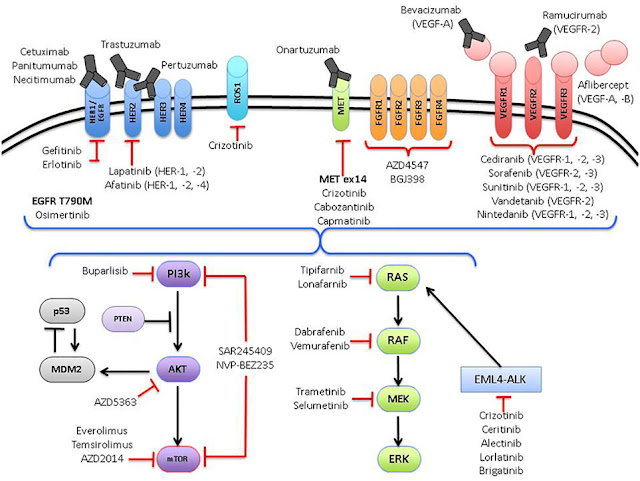
Imprecision in the Era of Precision Medicine in Non-Small Cell Lung Cancer (2017 Frontiers of Medicine free full text)

Over the past decade, major advances have been made in the management of advanced non-small cell lung cancer (NSCLC). There has been a particular focus on the identification and targeting of putative driver aberrations, which has propelled NSCLC to the forefront of precision medicine. Several novel molecularly targeted agents have now achieved regulatory approval, while many others are currently in late-phase clinical trial testing. 
http://journal.frontiersin.org/article/10.3389/fmed.2017.00039/full?utm_source=F-AAE&utm_medium=EMLF&utm_campaign=MRK_275249_39_Medici_20170518_arts_A
These antitumor therapies have significantly impacted the clinical outcomes of advanced NSCLC and provided patients with much hope for the future. Despite this, multiple deficiencies still exist in our knowledge of this complex disease, and further research is urgently required to overcome these critical issues. This review traces the path undertaken by the different therapeutics assessed in NSCLC and the impact of precision medicine in this disease. We also discuss the areas of “imprecision” that still exist in NSCLC and the modern hypothesis-testing studies being conducted to address these key challenges.

Monday, May 15, 2017

Tracking the Evolution of Non–Small-Cell Lung Cancer (Free full text NEJM 2017)

Lung cancer is the leading cause of cancer-related death worldwide, with non–small-cell lung cancer (NSCLC) being the most common type. Large-scale sequencing studies have revealed the complex genomic landscape of NSCLC and genomic differences between lung adenocarcinomas and lung squamous-cell carcinomas. However, in-depth exploration of NSCLC intratumor heterogeneity (which provides the fuel for tumor evolution and drug resistance) and cancer genome evolution has been limited to small retrospective cohorts. Therefore, the clinical significance of intratumor heterogeneity and the potential for clonality of driver events to guide therapeutic strategies have not yet been defined.
http://www.nejm.org/doi/full/10.1056/NEJMoa1616288#t=articleTop

Tracking Non–Small-Cell Lung Cancer Evolution through Therapy (TRACERx) is a multicenter, prospective cohort study, which began recruitment in April 2014 with funding from Cancer Research UK. The target enrollment is 842 patients from whom samples will be obtained for high-depth, multiregion whole-exome sequencing of surgically resected NSCLC tumors in stages IA through IIIA. One primary objective of TRACERx is to investigate the hypothesis that intratumor heterogeneity — in terms of mutations (single or dinucleotide base substitutions or small insertions and deletions) or somatic copy-number alterations (reflecting gains or losses of chromosome segments) - is associated with clinical outcome. Here, we report on the first 100 patients who were prospectively recruited in the study.
Read Full text:
http://www.nejm.org/doi/full/10.1056/NEJMoa1616288#t=articleTop

Saturday, January 14, 2017

2017 Lung Cancer Guidelines: The Eighth Edition Lung Cancer Stage Classification

Stage classification provides a nomenclature about the anatomic extent of a cancer; a consistent language provides the ability to communicate about a specific patient and about cohorts of patients in clinical studies. This paper summarizes the eighth edition of lung cancer stage classification, which is the worldwide standard as of January 1, 2017. 
http://journal.publications.chestnet.org/article.aspx?articleID=2578191

This revision is based on a large global database, a sophisticated analysis, extensive internal validation as well as multiple assessments confirming generalizability. 
http://journal.publications.chestnet.org/article.aspx?articleID=2578191

Practicing clinicians must be familiar with the stage classification system when managing contemporary patients with lung cancer.
Fulltext:

Thursday, February 4, 2016

Pathways connecting inflammation and Lung Cancer (2016 American Journal of Respiratory and Critical Care Medicine)

http://www.atsjournals.org/doi/abs/10.1164/rccm.201508-1545CI#.VrOZtuZJ-Ul
Lung cancer is the leading cause of cancer mortality worldwide, and at only 18%, it has one of the lowest 5-year survival rates of all malignancies. With its highly complex mutational landscape, treatment strategies against lung cancer have proved largely ineffective. However with the recent success of immunotherapy trials in lung cancer, there is renewed enthusiasm in targeting the immune component of tumors. Macrophages make up the majority of the immune infiltrate in tumors and are a key cell type linking inflammation and cancer. Although the mechanisms through which inflammation promotes cancer are not fully understood, two connected hypotheses have emerged: an intrinsic pathway, driven by genetic alterations that lead to neoplasia and inflammation, and an extrinsic pathway, driven by inflammatory conditions that increase cancer risk. Here, we discuss the contribution of macrophages to these pathways and subsequently their roles in established tumors. We highlight studies investigating the association of macrophages with lung cancer prognosis and discuss emerging therapeutic strategies for targeting macrophages in the tumor microenvironment.


Read More: http://www.atsjournals.org/doi/abs/10.1164/rccm.201508-1545CI#.VrOZtuZJ-Ul

World Cancer Day - 4 February 2016

In recognition of World Cancer Day on February 4, we are supporting the World Cancer Day 2016: ‘We Can. I Can.’ campaign. The global campaign highlights how everyone, as a collective or as individuals, can do their part to reduce the global burden of cancer. 
Next year alone, nearly 9 million people are likely to die of cancer, and left unchecked, the number of deaths will increase to 13 million per year by 2030. World Cancer Day is a chance to reflect on what you can do: make a pledge and take action. Whatever you choose to do ‘We Can. I Can.’ will make a difference to the fight against cancer. The initiative outlines nine targets to be achieved by 2025 with the overarching goal to reduce cancer deaths by 25% by 2025. The targets include strengthening health systems, measuring cancer burden and impact of cancer plans in all countries, reducing exposure to cancer risk factors, universal coverage of HPV and HBV vaccination, reduction of stigma and dispelling myths about cancer, universal access to screening and early detection for cancer, improvement in access to services across the cancer care spectrum, universal availability of pain control and distress management, and improvement in education and training of healthcare professionals.
http://www.worldcancerday.org/about/2016-2018-world-cancer-day-campaign
According to the World Health Organization, lung cancer is the most common cancer worldwide, accounting for 1.8 million new cases in 2012, and is responsible for nearly one in five deaths. While most understand that smoking is the single greatest risk factor for lung cancer, regular exposure to secondhand smoke also increases the risk. In addition, environmental exposure to radon, asbestos, arsenic, beryllium, and uranium have all been linked to lung cancer. The risk of lung cancer also increases with a history of cancer in another part of the body, age, family history, radiation to the chest area, and lung diseases like COPD and tuberculosis.

Saturday, August 1, 2015

World Lung Cancer Day 2015

World Lung Cancer Day is a grassroots effort, started by a lung cancer survivor and embraced by the lung cancer community. It is a day to celebrate survivors, remember those who have passed and spread awareness to the general public about lung cancer. It is a day created by, and for, people with lung cancer.
www.thoracic.org/advocacy/global-public-health/firs/resources/World-Lung-Cancer-Day-Infographic.pdf
GOAL: The campaign aims to raise awareness about the global impact of lung cancer and encourages deeper understanding of lung cancer risk factors beyond smoking, as well as the importance of early treatment. Lung cancer is one of the deadliest cancers, and understanding this disease is key to preventing future deaths.
STATISTICS: The impact of lung cancer is widespread; global statistics include:
 Lung cancer is the most common cancer worldwide, accounting for 1.8 million new cases in 2012, and is responsible for nearly one in five cancer deaths.
 Lung cancer claims more lives yearly than breast, colon, and prostate cancers combined.
 Tobacco use is the most significant risk factor for cancer causing an estimated 70 percent of global lung cancer deaths.
 The risk of getting lung cancer increases with age and is greater in men than in women.
 The highest incidence of lung cancer is in North America and Europe; and the lowest incidence is in Africa, Latin America and the Caribbean.
RISK FACTORS: While smoking is widely recognized as a risk factor for lung cancer, other lessor known risks are also important:
 A history of cancer in another part of the body increases your risk.
 If one of your parents or siblings has had lung cancer, your risk of
developing lung cancer may be increased.
 Radiation increases the risk of developing lung cancer.
 Radon, asbestos, arsenic, beryllium and uranium have all been
linked to lung cancer.
 Diseases such as emphysema, chronic bronchitis, chronic obstructive pulmonary disease and TB may increase lung cancer risk by 50 percent to 100 percent.
PARTICIPANTS: More than 70,000 global FIRS members have united for World Lung Cancer Day, including: 
American College of Chest Physicians (CHEST) 
Asociación Latinoamericana del Thorax (ALAT)
American Thoracic Society (ATS)
Asian Pacific Society of Respirology (APSR)
European Respiratory Society (ERS)
International Union Against Tuberculosis and Lung Disease (The Union) 
Pan African Thoracic Society (PATS)

Wednesday, February 4, 2015

Thursday, July 31, 2014

World Lung Cancer Day 2014

Dear Respiratory Friends today is a World Lung Cancer Day 2014!
Please mark your calendar for August 1, 2014, the 3rd annual World Lung Cancer Day!
Join in to Celebrate, Commemorate and Support all those affected by the #1 Cancer Killer.
https://www.facebook.com/events/309580722464921/

Lung Cancer, often referred to as the “Invisible Disease”, is generally asymptomatic and often goes undetected or misdiagnosed, while advancing to a late incurable stage. Only 15% of patients diagnosed in the late stages will survive 5 years.
Although early detection screening has been a topic of great concern and study, the guidelines established by the American Cancer Society, continue to leave a large percent of the population ineligible for screening. Anyone can get Lung cancer.
Widely portrayed and publicized as a “Smokers Disease”, over 60% of newly diagnosed patients are never smokers or quit years ago .An increasing amount of young non-smoking women are being diagnosed. Anyone with lungs can get Lung Cancer.
Lung Cancer is the #1 cancer killer in the U.S., claiming 160,000 lives annually. This is nearly 10 times the amount of lives lost to AIDS ( 18,000 annually) . Lung cancer claims more lives than breast, colon, kidney, and melanoma cancers ...combined.
This year, Lung Cancer will kill twice as many women as Breast Cancer.
Lung Cancer receives less research funding (per death) than any other type of cancer.
Radon, asbestos, diesel, poor air quality, environmental pollutants, chemical toxicity, occupational exposures, genetics, - are all known factors that contribute to causing Lung Cancer. Anyone that breathes, can get Lung Cancer.
The first question most Lung Cancer Patients are asked is “Did You Smoke?". The public perception that Lung cancer is a smoker’s disease, the “blame-the-victim” mentality and the overall stigma attached to this disease, far too often denies Lung cancer patients the support and compassion afforded other cancers and major diseases.
Lung cancer patients face the same physical, emotional and financial hardships as any other cancer. They battle the same fears, depression, losses and grueling treatments. Yet those battling receive minimal recognition and support from our society. Lung Cancer is bad-Its victims are not. Like AIDS, Alcoholism, Obesity, Drug abuse and a myriad of diseases that can be “rooted in causes” Lung cancer Patients and Caregivers deserve support, not shame and blame.

World Lung Cancer Day is a day to Celebrate, Commemorate & Support the people affected by Lung Cancer. 
https://www.facebook.com/events/309580722464921/

Our Voice is being heard around the World, from prominent Cancer Centers to Lung Cancer Organizations & groups...But most especially, in events held to honor the people of lung cancer.
World Lung Cancer Day is recorded in Chase's Worldwide Calendar of Events (The #1 global reference source, used by News & Media for holidays & events) as an annual day of Observance for all those affected by and lost to Lung Cancer worldwide.
WLCD is an initiative driven by the People of Lung Cancer, with no Political or Organizational affiliations or global boundaries.
23+ Official Proclamations declaring August 1,WLCD have been issued in USA States & Cities. Events, vigils, Memorials, community gatherings & celebrations are being held. Social media, newspapers & magazines are promoting WLCD. Worldwide cancer centers, health groups & organizations recognize & celebrate World Lung Cancer Day-August 1.

Saturday, November 17, 2012

Sunday Respiratory Video: LIFE IN SMOKE - UNA VITA IN FUMO

November is a Lung Cancer Awareness Month!!
Respiratory Decade is supporting all Respiratory initiative!
Today we are posting Life in Smoke - Una Vita in Fumo is a short-film created completly by our Italian friend Gianluca Fratellini. The story tells about Phil, a man like everyone else yet different, has a mother that smokes. They have an unusual experience of meeting the world of cigarettes, which changes his life, as well as the lives of others.
0