Wednesday, November 16, 2016

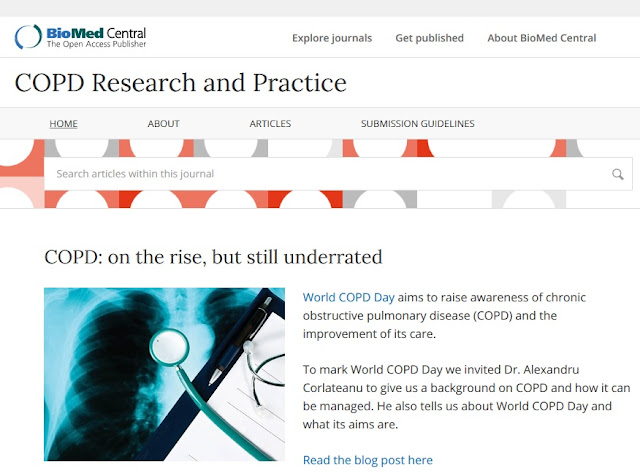
World COPD Day 2016: COPD on the rise, but still underrated from BioMed Central’s blog network

To mark World COPD Day 2016 we invited Dr. Alexandru Corlateanu to give us a background on chronic obstructive pulmonary disease and how it can be managed. He also tells us about World COPD Day and what its aims are. It also has been highlighted on COPD Research and Practice website!
http://blogs.biomedcentral.com/on-medicine/2016/11/16/copd-on-the-rise-but-still-underrated/

Read full text blog post: 
http://blogs.biomedcentral.com/on-medicine/2016/11/16/copd-on-the-rise-but-still-underrated/

Monday, November 14, 2016

World COPD Day 2016 in Italy

Dear Respiratory Friends!
We are happy to present you Great event dedicated to World COPD Day 2016 organized by World known Italian experts of COPD in Modena at 16 November 2016! 
http://goldcopd.it/giornata-mondiale-bpco-2016/
Read more:

Sunday, November 13, 2016

Severe asthma: anti-IgE or anti-IL-5? (full text article from European Clinical Respiratory Journal 2016)

Dear friends please read interesting article: Severe asthma: anti-IgE or anti-IL-5? from European Clinical Respiratory Journal 2016!
Severe asthma is a discrete clinical entity characterised by recurrent exacerbations, reduced quality of life and poor asthma control as ordinary treatment regimens remain inadequate. Difficulty in managing severe asthma derives partly from the multiple existing phenotypes and our inability to recognise them. Though the exact pathogenetic pathway of severe allergic asthma remains unclear, it is known that numerous inflammatory cells and cytokines are involved, and eosinophils represent a key inflammatory cell mediator. Anti-IgE (omalizumab) and anti-IL-5 (mepolizumab) antibodies are biological agents that interfere in different steps of the Th2 inflammatory cascade and are licensed in severe asthma. 
http://www.ecrj.net/index.php/ecrj/article/view/31813
Both exhibit a favourable clinical outcome as they reduce exacerbation rate and improve asthma control and quality of life, while mepolizumab also induces an oral steroid sparing effect. Nevertheless, it is still questionable which agent is more suitable in the management of severe allergic asthma since no comparable studies have been conducted. Omalizumab’s established effectiveness in clinical practice over a long period is complemented by a beneficial effect on airway remodelling process mediated mainly through its impact on eosinophils and other parameters strongly related to eosinophilic inflammation. However, it is possible that mepolizumab through nearly depleting eosinophils could have a similar effect on airway remodelling. Moreover, to date, markers indicative of the patient population responding to each treatment are unavailable although baseline eosinophils and exacerbation rate in the previous year demonstrate a predictive value regarding anti-IL-5 therapy effectiveness. On the other hand, a better therapeutic response for omalizumab has been observed when low forced expiratory volume in 1 sec, high-dose inhaled corticosteroids and increased IgE concentrations are present. Consequently, conclusions are not yet safe to be drawn based on existing knowledge, and additional research is necessary to unravel the remaining issues for the severe asthmatic population.
Read more:

Thursday, October 27, 2016

Tuberculosis in 2016 (free full text review from Nature Reviews Disease Primers)

New disease Primer provides a comprehensive overview of TB epidemiology, prevention, diagnosis and treatment – just published and open access for 30 days. This comprehensive Primer puts into context the current clinical and translational challenges in tackling TB globally and reviews the latest advances in the science of TB, which may lead to better tools and help us meet End TB targets. 
http://www.nature.com/articles/nrdp201676
Tuberculosis (TB) is an airborne infectious disease caused by organisms of the Mycobacterium tuberculosis complex. Although primarily a pulmonary pathogen, M. tuberculosis can cause disease in almost any part of the body. Infection with M. tuberculosis can evolve from containment in the host, in which the bacteria are isolated within granulomas (latent TB infection), to a contagious state, in which the patient will show symptoms that can include cough, fever, night sweats and weight loss. Only active pulmonary TB is contagious. In many low-income and middle-income countries, TB continues to be a major cause of morbidity and mortality, and drug-resistant TB is a major concern in many settings. Although several new TB diagnostics have been developed, including rapid molecular tests, there is a need for simpler point-of-care tests. Treatment usually requires a prolonged course of multiple antimicrobials, stimulating efforts to develop shorter drug regimens. Although the Bacillus Calmette–GuĂ©rin (BCG) vaccine is used worldwide, mainly to prevent life-threatening TB in infants and young children, it has been ineffective in controlling the global TB epidemic. Thus, efforts are underway to develop newer vaccines with improved efficacy. New tools as well as improved programme implementation and financing are necessary to end the global TB epidemic by 2035.
Read more:

Sunday, October 23, 2016

The Health Effects of Electronic Cigarettes (2016 free full text article from NEJM)

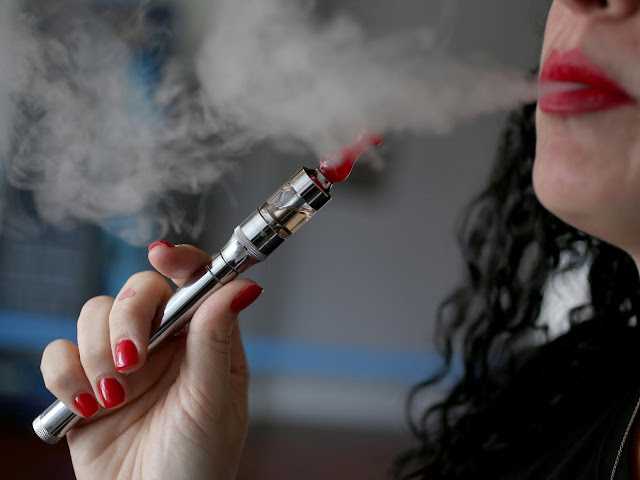
Electronic cigarettes (e-cigarettes), also known as electronic nicotine-delivery systems, are devices that produce an aerosol by heating a liquid that contains a solvent (vegetable glycerin, propylene glycol, or a mixture of these), one or more flavorings, and nicotine, although the nicotine may be omitted. The evaporation of the liquid at the heating element is followed by rapid cooling to form an aerosol. This process is fundamentally different from the combustion of tobacco, and consequently the composition of the aerosol from e-cigarettes and the smoke from tobacco is quite different. E-cigarette aerosol is directly inhaled (or “vaped”) by the user through a mouthpiece. Each device includes a battery, a reservoir that contains the liquid, and a vaporization chamber with heating element . The design of the e-cigarette was originally based on the design of conventional cigarettes but has since evolved, with later-generation devices permitting users to refill a single device with different liquids and to customize the heating element.
http://www.nejm.org/doi/full/10.1056/NEJMra1502466
It is clear that the use of e-cigarettes has biologic effects and possibly health-related effects on persons who do not smoke conventional tobacco products. Although some studies suggest that smoking e-cigarettes may be less dangerous than smoking conventional cigarettes, more needs to be learned. A particular challenge in this regard is the striking diversity of the flavorings in e-cigarette liquids, since the effects on health of the aerosol constituents produced by these flavorings are unknown. At present, it is impossible to reach a consensus on the safety of e-cigarettes except perhaps to say that they may be safer than conventional cigarettes but are also likely to pose risks to health that are not present when neither product is used. Epidemiologic data indicate that e-cigarette use is growing among minors and young adults and may promote nicotine addiction in these age groups among those who would otherwise have been nonsmokers. More research is needed to understand the effectiveness of e-cigarettes as a smoking-cessation tool, to identify the health risks of e-cigarette use, and to make these products as safe as possible. Even as this research is under way, regulations that make e-cigarettes unavailable to children is warranted, as are public health initiatives that discourage nonsmokers from smoking conventional cigarettes or using e-cigarettes.
Read more:

Saturday, October 22, 2016

Current Controversies in the Pharmacological Treatment of Chronic Obstructive Pulmonary Disease (article from Blue Journal 2016)

Clinical phenotyping is currently used to guide pharmacological treatment decisions in chronic obstructive pulmonary disease (COPD), a personalized approach to care. Precision medicine integrates biological (endotype) and clinical (phenotype) information for a more individualized approach to pharmacotherapy, to maximize the benefit versus risk ratio. Biomarkers can be used to identify endotypes. To evolve toward precision medicine in COPD, the most appropriate biomarkers and clinical characteristics that reliably predict treatment responses need to be identified. 
http://www.atsjournals.org/doi/abs/10.1164/rccm.201606-1179PP#.WAuvWMlESUl
FEV1 is a marker of COPD severity and has historically been used to guide pharmacotherapy choices. However, we now understand that the trajectory of FEV1 change, as an indicator of disease activity, is more important than a single FEV1 measurement. There is a need to develop biomarkers of disease activity to enable a more targeted and individualized approach to pharmacotherapy. Recent clinical trials testing commonly used COPD treatments have provided new information that is likely to influence pharmacological treatment decisions both at initial presentation and at follow up. In this Perspective, we consider the impact of recent clinical trials on current COPD treatment recommendations. We also focus on the movement toward precision medicine and propose how this field needs to evolve in terms of using clinical characteristics and biomarkers to identify the most appropriate patients for a given pharmacological treatment.
Read More: 

Friday, October 21, 2016

Exercise-Induced Pulmonary Edema in Athletes (article from 2016 Current Respiratory Medicine Reviews)

Dear Respiratory friends we are happy to present you our fresh article from Current Respiratory Medicine Reviews on Exercise-Induced Pulmonary Edema in Athletes!
Several pulmonary conditions were proven to be fatal in athletes. One of these conditions is pulmonary edema in athletes which requires differential diagnosis and often management in the ICU. 
https://www.researchgate.net/publication/309187352_Exercise-Induced_Pulmonary_Edema_in_Athletes
Pulmonary edema in athletes can develop due to different sport activities including swimming, diving, running, cycling, mountain biking and the etiology and pathophysiology of these conditions may be different. This underlines the importance of pulmonary medicine specialist in the management of acute disease in athletes. The review focuses on pulmonary edema in athletes who participate in aquatic activities, running, cycling and mountain biking.