Showing posts with label American College of Chest Physicians. Show all posts

Sunday, August 9, 2015

CHEST 2015 Annual Meeting in Montreal Canada


We are happy to invite you to Chest 2015 meeting!
Join CHEST 2015 Annual Meeting in Montreal Canada, your connection to learning opportunities that will help optimize the clinical decisions you make. We’ve packed as many education deliverables as we can into 4 days to make the BIGGEST impact on your professional development and patient care. We’ll offer a full schedule of sessions that address topics from an interdisciplinary and interprofessional perspective to ensure a comprehensive (and BIG) understanding of chest medicine. And, our international faculty and attendees will give you a worldwide viewpoint on clinical issues. It doesn’t get much BIGGER than that!
https://www.youtube.com/watch?v=LdCrI2_tgv4

Don’t miss:
  • Interdisciplinary programs
  • Simulation programs
  • Postgraduate courses
  • More than 300 general sessions
  • Expanded MOC opportunities
  • Original investigation presentations
  • New diagnostic and treatment solutions in the exhibit hall
more info:
http://chestmeeting.chestnet.org/

Saturday, November 8, 2014

Prepared for Ebola??? CHEST 2014 Ebola-focused Session (Video session)

In response to the widespread coverage of the Ebola virus, CHEST hosted late-breaking Ebola-focused sessions during CHEST 2014 in Austin, Texas. These sessions featured health professionals who have been on the front lines of the Ebola outbreak in West Africa, clinicians who have experienced Ebola in the United States, and other experts in virology, epidemiology, and disaster preparedness.

Sunday, October 26, 2014

CHEST World Congress in April 2016

The American College of Chest Physicians (CHEST) announced today at its CHEST Annual Meeting in Austin that CHEST World Congress 2016 will be held in Shanghai, China, in April 2016. Clinicians specializing in pulmonary, critical care, and sleep medicine from around the world are expected to participate in the event, offered with support of the Chinese Thoracic Society (CTS).  


Delegates who attend CHEST World Congress 2016 in Shanghai will participate in a variety of educational experiences ranging from hands-on simulation training and keynote addresses to presentations by leading health-care experts and reports on the latest research in chest medicine.

“We are pleased to announce Shanghai, China, as the location of our next CHEST World Congress,” said Paul A. Markowski, executive vice president and CEO at CHEST. “We expect that this congress will attract clinicians practicing in China, across the Asia Pacific region, and throughout the world who will benefit from the educational and clinical resources CHEST delivers to help improve patient care.”

“We are already working to make CHEST World Congress 2016 in Shanghai bigger and better,” said Michael H. Baumann, MD, MS, FCCP, president of the American College of Chest Physicians.  “This CHEST World Congress will complement the launch last summer of our pulmonary and critical care fellowship training program in partnership with the Chinese Thoracic Society.  The first graduates will complete their training in the summer of 2016, shortly after our World Congress.”
“This program will offer the great clinical science our clinicians have come to expect from CHEST and will be easily accessible for our global community,” added Darcy Marciniuk, MD, FCCP, CHEST World Congress 2016 program co-chair. “We look forward to a robust congress with opportunities for networking, our signature simulation education, as well as presentations by international thought leaders in pulmonary, critical care, and sleep medicine.”
Saturday, October 18, 2014

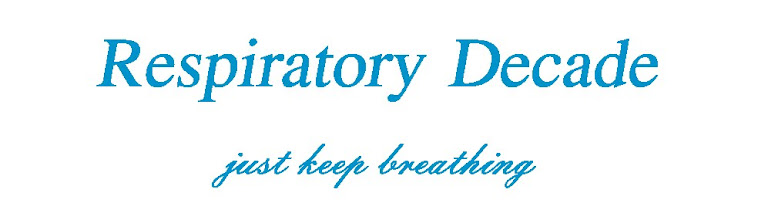
2014 Guidelines: Preventing Acute Exacerbation in COPD: An Evidence-Based Approach

Experts in COPD and evidence-based medicine from CHEST and the Canadian Thoracic Society have issued a clinical practice guideline Prevention of Acute Exacerbations of COPD. Recommendations are graded in accordance with the strength of the supporting evidence and take into account physician and patient preferences. Text and evidence tables provide information concerning supporting data for the thoughtful physician. Topics covered include pharmacologic treatments, nonpharmacologic treatments, and management strategies. Easy online access makes this guideline a useful, daily tool for the busy clinician.
http://journal.publications.chestnet.org/data/Journals/CHEST/0/chest.14-1677.pdf

Exacerbations are to COPD what myocardial infarctions are to coronary artery disease: they are acute, trajectory-changing, and often deadly manifestations of a chronic disease. 

Tuesday, October 29, 2013

Five Things Chest Physicians and Respiratory Patients Should Question

Dear Respiratory friends we are re-posting interesting questions and answers from American College of Chest Physicians and American Thoracic Society!
1
Don’t perform computed tomography (CT) surveillance for evaluation of indeterminate pulmonary nodules at more frequent intervals or for a longer period of time than recommended by established guidelines.
Clinical practice guidelines for pulmonary nodule evaluation (such as those issued by the Fleischner Society or the American College of Chest Physicians) suggest that intensity of surveillance should be guided by the likelihood of malignancy. In patients with no prior history of cancer, solid nodules that have not grown over a 2-year period have an extremely low risk of malignancy (although longer follow-up is suggested for ground-glass nodules). Similarly, intensive surveillance (e.g., repeating CT scans every 3 months for 2 years or more) has not been shown to improve outcomes such as lung cancer mortality. Meanwhile, extended or intensive surveillance exposes patients to increased radiation and prolonged uncertainty.
2
Don’t routinely offer pharmacologic treatment with advanced vasoactive agents approved only for the management of pulmonary arterial hypertension to patients with pulmonary hypertension resulting from left heart disease or hypoxemic lung diseases (Groups II or III pulmonary hypertension).
Evidence and clinical practice guidelines have not established benefits of vasoactive agents (e.g., prostanoids, phosphodiesterase inhibitors, endothelin antagonists) for patients with pulmonary hypertension resulting from left heart disease or hypoxemic lung diseases. Moreover, the use of these agents may cause harm in certain situations and incurs substantial cost and resource utilization. Patients should be carefully assessed (including at a minimum right heart catheterization, echocardiography, chest CT, six minute walk test and pulmonary function testing) to confirm that they have symptomatic pulmonary arterial hypertension prior to having approved agents initiated.
3
For patients recently discharged on supplemental home oxygen following hospitalization for an acute illness, don’t renew the prescription without assessing the patient for ongoing hypoxemia.
Hypoxemia often resolves after recovery from an acute illness, and continued prescription of supplemental oxygen therapy incurs unnecessary cost and resource use. At the time that supplemental oxygen is initially prescribed, a plan should be established to re-assess the patient no later than 90 days after discharge. Medicare and evidence-based criteria should be followed to determine whether the patient meets criteria for supplemental oxygen.
4
Don’t perform chest computed tomography (CT angiography) to evaluate for possible pulmonary embolism in patients with a low clinical probability and negative results of a highly sensitive D-dimer assay.
Clinical practice guidelines for pulmonary embolism indicate that the cost and potential harms of CT angiography (including radiation exposure and the possibility of detecting and treating clinically insignificant pulmonary emboli with anticoagulation) outweigh the benefits for patients with a low pre-test probability of pulmonary embolism. In patients with a low clinical prediction score (e.g., Wells or Geneva score) followed by a negative D-dimer measured with a high sensitivity test (e.g., ELISA), pulmonary embolism is effectively excluded and no further imaging is indicated for pulmonary embolism evaluation.
5
Don’t perform CT screening for lung cancer among patients at low risk for lung cancer.
Low dose chest CT screening for lung cancer has the potential to reduce lung cancer death in patients at high risk (i.e., individuals aged 55-74 with at least a 30-pack year history of tobacco use, who are either still smoking or quit within the past 15 years). However, CT screening for lung cancer also has the potential to cause a number of adverse effects (e.g., radiation exposure, high false positive rate, harms related to downstream evaluation of pulmonary nodules, overdiagnosis of indolent tumors). Thus, screening should be reserved for patients at high risk of lung cancer and should not be offered to individuals at low risk of lung cancer.

Sunday, April 21, 2013

AMERICAN COLLEGE OF PHYSICIANS RECOMMENDS THE DOCTORS DO NOT ACCEPT REQUESTS FOR FRIENDSHIP OF PATIENTS BY NETWORKS

Physicians should avoid accepting as "friend" requests from former or current patients through social networks, according to a new statement issued by the American College of Physicians (ACP), together with Federation of State Medical Boards (FSMB) at its annual meeting in the U.S., last Friday. Pages business or group medical practices are acceptable, but doctors should keep this separate from their personal pages.

While social networks may provide benefits in the doctor-patient relationship, they can also present ethical problems. In a survey of state boards of health in the U.S., 92% received complaints about the behavior of the doctors on the Internet, which led to actions including revocation of license.
According to the document, the physician should respect five principles:
- Protect the confidence, confidentiality, privacy and respect in online communications with patients;
- Maintain professional and social spheres independent online but act professionally in both
- Use e-mail and other electronic communications only in doctor-patient relationships established;
- Make a "self-audit" to determine the periodic accuracy of the information available online;
- Be aware that online postings may have other implications for their professional lives.

Do you agree with these principles?

Sunday, May 13, 2012

ACCP 2012 event: Pulmonary Rehabilitation and Home Mechanical Ventilation. State of Science and Practice

Dear friends I am just back from the Conference with International Participation entitled: “Pulmonary Rehabilitation and  Home Mechanical Ventilation. State of Science and Practice”, and the Satellite event: “Sleep Medicine Course, Modern Treatments Applied in Sleep Apnea Syndrome” endorsed by the American College of Chest Physicians (ACCP) which took place in Iasi, between 10 th – 12 th of May 2012.

It was great scientific event, quality of presentations was very high which was determined by international and national faculty! In event participated leaders from  American College of Chest Physicians: Professor Suhail Raoof, MD, FCCP, MACP, FCCM, President of ACCP, USA; Professor. David Gutterman, MD, FCCP, ACCP Immediate Past President, USA; Professor Darcy Marciniuk, MD, FCCP, ACCP President Elect, Canada; Florin Mihălțan, MD, PhD, FCCP, President of Romanian Society of Pneumology.
Also were organized very useful Hands-on workshops on Pulmonary Rehabilitation, Sleep medicine and Orotracheal Intubation.
I want to congratulate all organizers and participants with successful event!